The 2026 Housing Outlook: Why Australia’s Building Approvals are a Double-Edged Sword.
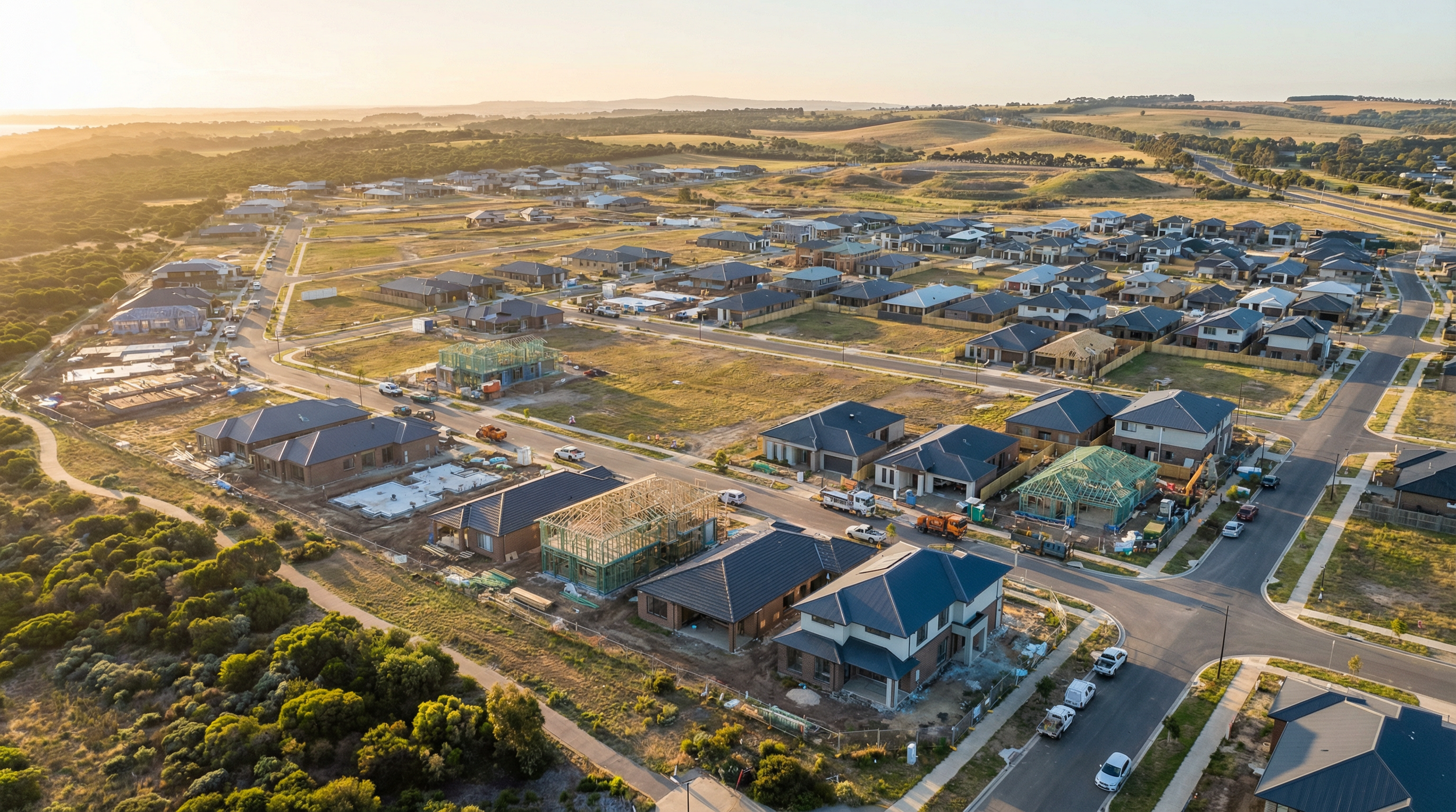
As we look toward 2026, the Australian housing market is caught in a paradox. Demand for housing has never been higher, yet the latest ABS data released in December 2025 shows that total dwelling approvals fell by 6.4% in the final quarter of the year.
For developers, builders, and investors, this "approvals slump" is creating a massive supply-demand vacuum that will define the property market for the next 24 months.
The 1.2 Million Home Target: A Growing Shortfall
The federal government’s National Housing Accord set an ambitious target to build 1.2 million well-located homes over five years, starting from July 2024. However, as we close out 2025, the data suggests this goal is drifting further out of reach.
The Annual Requirement: To hit the 1.2 million mark by 2029, Australia needs to complete an average of 240,000 homes per year.
The 2025 Reality: According to recent HIA and ABS analysis, we are currently tracking at roughly 192,100 approvals per year.
The Mounting Deficit: After a year of underperformance, the industry would now need to deliver over 255,000 homes annually for the remainder of the decade to catch up—a pace that many analysts believe is insurmountable under current economic conditions.
The Geelong Spotlight: A Market Under Pressure
While metropolitan Melbourne has faced significant hurdles, the City of Greater Geelong remains a critical growth barometer. However, the latest local figures show that even our region isn't immune to the national slowdown.
The Approvals Slump: Geelong recorded 2,975 dwelling approvals for the 2025 calendar year—a sharp decline of nearly 800 homes compared to 2024.
Growth Area Impact: The shortfall is most acute in our key development corridors. Armstrong Creek saw 359 fewer homes approved this year, while Lara also recorded a dip as developers struggle with soaring levies and infrastructure costs.
The "Viability Gap": With land prices in some areas threatening to hit the $500,000 mark, project feasibility is on a knife-edge. As traditional bank valuations lag behind these rising costs, many approved permits are sitting idle.
The 2026 Opportunity: Why Private Capital is the Key
With traditional banks remaining cautious due to high construction risks and rigid presale requirements, Private Lending has become the primary engine for getting projects out of the "approved" phase and into the "commenced" phase.
At Mercer Funding Group, we are seeing a surge in developers using private capital to bridge the gap:
Equity Release: Pulling capital from completed stock to fund the commencement of new stages.
Land Banking Finance: Securing shovel-ready sites now while approvals are low, positioned for the 2027 market upswing.
Bridge-to-Construction: Closing the funding gap when traditional bank valuations don't meet actual 2025 build costs.
The Bottom Line: The shortage of approvals today guarantees a shortage of finished homes in 2027. For developers who can secure funding now, the "supply gap" represents a significant market opportunity.
About Mercer Funding Group
Based in Geelong and serving business owners and developers Australia-wide, Mercer Funding Group is a specialist provider of private commercial capital. We bridge the gap where traditional banks fall short, providing the speed, flexibility, and transparency required to move projects forward.
Whether you’re navigating a property development in a growth corridor or require an equity release for a new business venture, we provide the strategic bridge to your next milestone.
Disclaimer: This article is provided by Mercer Funding Group for informational purposes only. The content is general in nature and does not constitute financial, legal, or taxation advice. Because commercial lending is complex and every business situation is unique, you should consult with a qualified professional before making any financial commitments. Mercer Funding Group facilitates commercial transactions only and does not provide or assist with consumer credit.